Kitchen Budget guide
Best Coffee Maker That Grinds Beans – Budget to Premium Picks for 2026
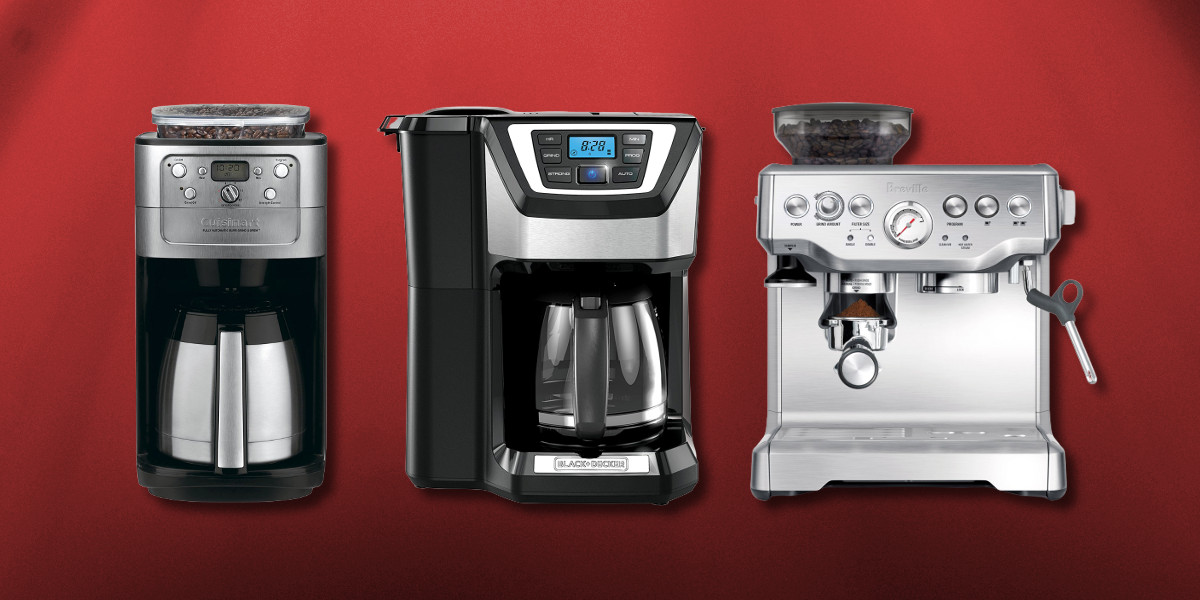
A coffee maker with a built-in grinder sounds like a convenience win: one machine, fresh beans, fewer things to wash. That is mostly true. But the category spans everything from a $120 blade-grinder carafe machine to a $600 multi-mode espresso setup, and the tradeoffs between those extremes are significant. This guide covers the current options, what they actually cost, and who each one is actually for.
All prices are verified from major US retailers as of June 2026. No discontinued models are listed.
Quick Picks
| Pick | Product | Price range | Best for |
|---|---|---|---|
| Budget carafe | Cuisinart DGB-400NAS | Around $120 | 12-cup households, basic grind-and-brew |
| Budget thermal | Cuisinart DGB-450 | Around $150 | Thermal carafe crowd, same budget tier |
| Single-serve step-up | Cuisinart DGB-30 | Around $250 | Solo brewers who want a real burr grinder |
| Mid-range splurge | Breville Grind Control BDC650BSS | Around $400 | Customization-focused carafe households |
| Premium single-serve | De’Longhi TrueBrew CAM51015B | Around $450 | Bean-to-cup simplicity, no filters |
| All-in-one | Ninja Luxe Cafe Premier ES601 | Around $600 | Drip plus espresso plus cold brew |
What to Look For Before You Buy
Burr grinder vs. blade grinder
This is the most important decision in the category. Blade grinders chop beans randomly, which produces uneven particle sizes and inconsistent extraction. You get a serviceable cup, but not a great one. Burr grinders crush beans between two abrasive surfaces to produce uniform particles, which means better flavor and more control over brew strength.
The Cuisinart DGB-400NAS and DGB-450 both use blade grinders. The Cuisinart DGB-30, Breville Grind Control, De’Longhi TrueBrew, and Ninja Luxe Cafe Premier all use burr grinders. If coffee quality is your priority, the burr grinder models are worth the price jump.
Carafe vs. single-serve
Single-serve machines (the DGB-30, TrueBrew) brew one cup at a time directly into your mug. No carafe to wash, no old coffee sitting on a hot plate. The downside is that if you need two or three cups in the morning, you are running the machine multiple times.
Carafe machines (DGB-400NAS, DGB-450, Breville Grind Control) brew a full pot. The DGB-450 uses a thermal carafe that keeps coffee hot for hours without a heating element, which is better for your second cup an hour later. The DGB-400NAS uses a glass carafe with a warming plate.
Programmability
All the carafe machines on this list let you program a brew time in advance so coffee is ready when you wake up. The Breville Grind Control goes further: it lets you dial in grind size, grind amount, and water temperature separately. The Cuisinart entry-level machines give you a 24-hour brew-start timer and basic strength settings.
Cleaning
Built-in grinders mean one more thing to clean. The DGB-30 and TrueBrew have removable grinder components that reviewers call reasonably easy to maintain. The Breville Grind Control has a hopper and grind chamber that need regular brushing to avoid stale oil buildup. Any grind-and-brew machine requires more cleaning attention than a standard drip maker, and owners across all these models flag that as the main ongoing friction.
Cuisinart DGB-400NAS (12-Cup Grind and Brew)
Who it’s for: Households that brew a full pot daily, want the convenience of whole beans, and are not interested in spending over $150 on a coffee maker.
The DGB-400NAS is the most accessible grind-and-brew machine on the market. It uses a blade grinder, which owners note produces somewhat uneven grinds, but reviewers report the overall cup quality is noticeably better than pre-ground coffee from the same bean. You get a 12-cup glass carafe, 24-hour programmable brew start, a 1-4 cup setting for smaller batches, and a grind-off option if you want to use pre-ground coffee.
The blade grinder is louder than a burr grinder and the glass carafe sits on a warming plate, which reviewers note flattens coffee flavor after about 30 minutes. For the price, those are acceptable tradeoffs.
Pros: Affordable entry point, programmable, works with any bean, widely available
Cons: Blade grinder limits cup quality ceiling, glass carafe plus warming plate is not ideal for second-cup situations
Price: Around $120 (Cuisinart.com)
Cuisinart DGB-450 (10-Cup Thermal Grind and Brew)
Who it’s for: The same budget-conscious carafe household as the DGB-400NAS buyer, but one that wants a thermal carafe instead of a glass one.
The DGB-450 brews 10 cups into a stainless thermal carafe, which keeps coffee hot and reasonably fresh for two to three hours without a warming plate. It uses the same blade grinder as the DGB-400NAS, so the grind quality ceiling is the same. Reviewers note the thermal carafe is the main reason to choose this model over the DGB-400NAS, and at $150 versus $120 the premium is small.
The 10-cup capacity is slightly less than the DGB-400NAS’s 12 cups, which matters if you are brewing for a larger household.
Pros: Thermal carafe means better second-cup quality, programmable, grind-off option
Cons: Same blade grinder limitations as DGB-400NAS, 10-cup instead of 12
Price: Around $150 (Cuisinart.com)
Cuisinart DGB-30 (Custom Grind and Brew Single-Serve)
Who it’s for: Solo or couple households that want fresh-ground single cups, a real burr grinder, and do not want to spend $400 or more.
The DGB-30 is the most compelling pick in the middle of this category. It has a stainless steel conical burr grinder, which reviewers consistently praise for producing a better cup than the blade-grinder Cuisinart models. You can brew into a standard mug or a travel cup (the drip tray adjusts), choose from multiple cup sizes and strength settings, and it is also compatible with single-serve pods if you want that option.
Owners note that the hopper holds enough beans for several days of single-cup brewing, and the removable components make cleaning manageable. The main complaint is that the single-serve format means you are running the machine twice if you want a second cup, and the machine takes a bit longer to grind-then-brew versus a standard drip maker.
At $250, it sits in a useful price gap: meaningfully cheaper than the Breville and De’Longhi premium picks, meaningfully better grind quality than the sub-$150 Cuisinart blade grinders.
Pros: Conical burr grinder, real cup quality upgrade over blade grinders, pod-compatible backup option, adjustable strength and size
Cons: Single-serve only means multiple cycles for multiple cups, slower than standard drip
Price: Around $250 (Target, Walmart, Cuisinart.com)
Breville Grind Control BDC650BSS (12-Cup Burr Grind and Brew)
Who it’s for: Households that want to brew a full carafe with a real burr grinder and want more brewing control than any sub-$300 machine offers.
The Grind Control is the best carafe-format grind-and-brew machine you can buy without stepping into full super-automatic espresso territory. It uses a built-in burr grinder with adjustable grind size, lets you set the exact number of cups you are brewing (so it adjusts the grind dose accordingly), and uses a thermal carafe. Reviewers who upgraded from a blade-grinder drip machine consistently call out noticeable flavor improvement.
The controls are more involved than the Cuisinart machines. Owners report a short learning curve to dial in grind size and dose for your preferred beans. Once dialed in, reviewers describe it as a reliable daily driver. The machine also has a programmable brew timer, so you can wake up to freshly ground and brewed coffee.
One honest note from owner reviews: the grinder component requires regular cleaning to prevent stale coffee oil buildup, which affects flavor over time if ignored.
Pros: Burr grinder in a carafe machine, adjustable grind and dose, thermal carafe, strong reviewer approval
Cons: Expensive for a drip machine, grinder needs regular maintenance, larger footprint
Price: Around $400 (Target, Breville.com)
De’Longhi TrueBrew CAM51015B (Single-Serve Bean-to-Cup)
Who it’s for: Someone who wants maximum single-cup simplicity from whole beans, no paper filters, no pods, no manual steps.
The TrueBrew is a different category of machine than the Cuisinarts. You load whole beans into the hopper, press a button, and it grinds, doses, and brews directly into your cup. No paper filters required. Reviewers describe it as genuinely one-touch, and owners note the cup quality is consistently good because the burr grinder dose adjusts for each brew size (6 available sizes, from a small 8 oz cup to a 24 oz travel size).
The machine is physically large and has a learning curve around grind settings for different beans, but once configured owners call it an almost zero-friction daily routine. The built-in grinder uses a conical burr, and the machine’s “Bean Extract Technology” is Delonghi’s proprietary method for optimizing grind dose to water ratio per cup size, which reviewers generally say works as claimed.
At $450 (currently on sale at Target from $500), it is a significant investment. The honest case for it is that you are paying for simplicity and cup quality simultaneously, and it replaces both a grinder and a coffee maker.
Pros: True one-touch bean-to-cup, no paper filters, conical burr grinder, consistent cup quality across sizes
Cons: Expensive, physically large, single-serve only, grinder requires periodic cleaning
Price: Around $450 on sale (Target, currently marked down from $500)
Ninja Luxe Cafe Premier ES601 (Espresso, Drip, and Cold Brew with Grinder)
Who it’s for: Households that want espresso drinks and drip coffee from one machine, with fresh-ground beans for both.
The ES601 is the most expensive option on this list and also the most versatile. It does drip coffee, espresso, and rapid cold brew, all from a single integrated conical burr grinder with 25 grind settings. Reviewers describe the espresso as genuinely espresso (not just strong coffee), and the built-in frother handles cappuccinos and lattes. The cold brew function produces cold brew in about 15 minutes, which reviewers call a practical convenience rather than a gimmick.
If you are comparing it to buying a separate espresso machine plus a grind-and-brew drip maker, the ES601 saves both counter space and money. If you just want drip coffee with fresh-ground beans, the Breville Grind Control is the better value at $200 less.
The machine is large and the learning curve is real. Owners note the grinder and portafilter components require cleaning after espresso pulls to prevent buildup, and getting espresso dial settings right for a new bean takes a few tries.
Pros: Three brewing modes, conical burr grinder, actual espresso capability, built-in frother, cold brew
Cons: Expensive, large footprint, steeper learning curve, regular cleaning required for espresso components
Price: Around $600 (SharkNinja.com, Best Buy)
What You Give Up With a Built-In Grinder
A grind-and-brew machine buys you convenience and one fewer appliance on the counter. What it costs you is grinder quality and flexibility.
A standalone burr grinder in the $150 to $200 range will outperform every grinder built into any machine on this list. Built-in grinders are compact, which limits burr size and grind consistency. They are also harder to clean and harder to upgrade separately when they wear out.
If you are a coffee enthusiast who wants genuinely excellent coffee, you are better served by a good drip maker paired with a separate grinder. The grind-and-brew category is for people who value simplicity, consolidation, and fresh-ground flavor over maximum cup quality. That is a legitimate choice. Just go in with accurate expectations.
Frequently Asked Questions
Are coffee makers with built-in grinders worth it?
Yes, with the right expectations. A grind-and-brew machine consistently produces better coffee than using pre-ground coffee in a standard drip maker, because beans start going stale immediately after grinding. The tradeoff is a more complex machine, more cleaning, and a grinder that is harder to replace or upgrade than a standalone unit. For most households that want fresh-ground coffee without a two-machine setup, they are worth it.
What is the difference between a burr grinder and a blade grinder in a coffee maker?
A blade grinder spins a blade that chops beans randomly, producing mixed particle sizes that extract unevenly. You get an inconsistent cup. A burr grinder uses two abrasive surfaces to crush beans to a specific particle size, which extracts more evenly and produces better flavor. The DGB-400NAS and DGB-450 use blade grinders. The DGB-30, Breville Grind Control, TrueBrew, and Ninja ES601 all use burr grinders.
Which coffee makers that grind beans are easiest to clean?
The Cuisinart DGB-400NAS and DGB-450 are the simplest because they are simpler machines overall. The DGB-30 has removable grinder components that owners find manageable. The Breville Grind Control, TrueBrew, and Ninja ES601 have more components and require more regular cleaning to maintain cup quality, particularly around the grinder and brew path. Cleaning hassle is directly proportional to machine complexity.
Can I use pre-ground coffee in a coffee maker with a built-in grinder?
Yes. All the machines on this list have a grind-off or bypass mode that lets you use pre-ground coffee, so you are not locked into whole beans. This is useful when you travel and bring coffee back, or when you want to use a pod system as a backup (the DGB-30 also accepts pods).
What is the best budget coffee maker that grinds beans?
The Cuisinart DGB-400NAS at around $120 is the most accessible option with a working built-in grinder and full programmability. If you want a burr grinder at a reasonable price, the Cuisinart DGB-30 at around $250 is the step up that actually changes the cup quality, not just the carafe format.