Home Budget guide
Best Robot Lawn Mower for Hills – What Actually Works on Slopes 2026
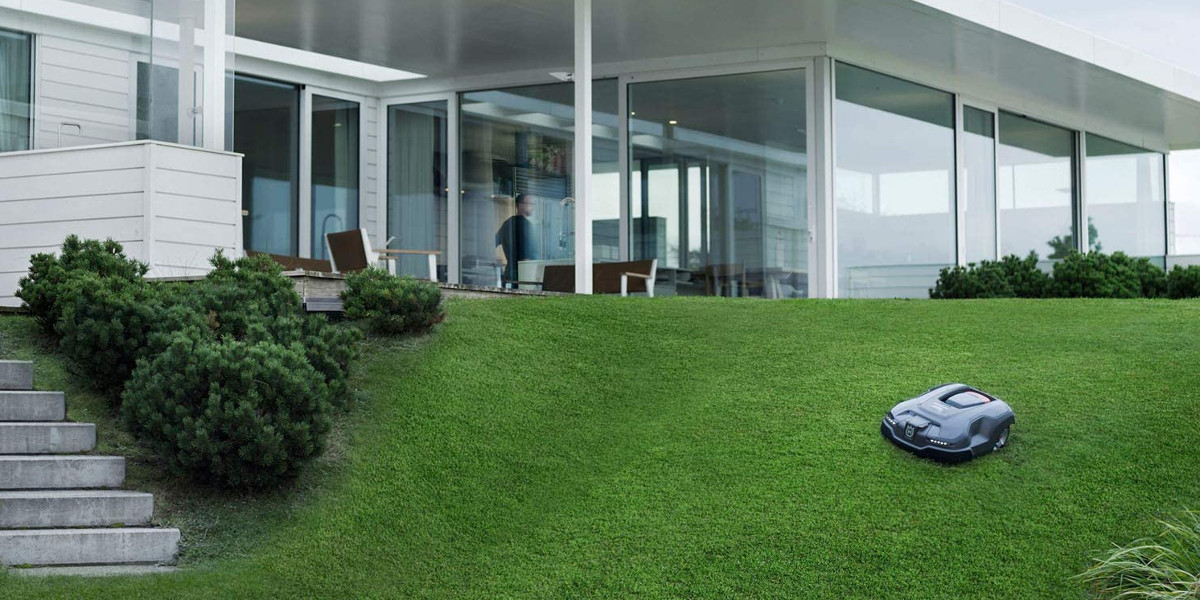
Robot mowers have gotten genuinely good on flat lawns. Hills are a different story. A mower rated for “gentle slopes” can sit spinning its wheels on anything steeper than a driveway approach, or it slides sideways and scalps your turf on the downhill run. If your yard has real hills, you need a machine with the right drivetrain and a slope rating you can trust, not a number buried in a spec sheet that translates to “works fine if your hill is basically flat.”
The good news: a handful of machines in 2026 actually handle serious inclines. The bad news: they are not cheap. A robot mower built for slopes starts around $1,800 and climbs well past $3,000. This guide covers five verified models, their real incline limits, and what you give up at each price point.
Quick Picks
| Pick | Product | Price range | Max slope | Best for |
|---|---|---|---|---|
| Best overall | Worx Landroid Vision Cloud 4WD (1 acre, WR344) | ~$2,999 | 84% (40 deg) | Steep, complex yards up to 1 acre |
| Best for extreme slopes | Mammotion LUBA 2 AWD 3000X | ~$2,599 | 80% (38.6 deg) | Wire-free setup, serious hills, 0.75 acre |
| Best premium/established | Husqvarna Automower 450XH | ~$3,299 | 45% (24 deg) | Larger yards, brand reliability, gentler hills |
| Best mid-range wire-free | Segway Navimow H220 | ~$2,199 | 45% (24 deg) | Moderate hills, 0.5 acre, no perimeter wire |
| Best entry point for hills | Worx Landroid Vision Cloud (1/2 acre, WR320) | ~$1,799 | 30% (17 deg) | Mild to moderate slopes, tighter budget |
What to Look for When Your Lawn Has Hills
Slope rating: the number that actually matters
Every robot mower lists a slope rating. Ignore anything under 25% (14 degrees) if you have real hills. That threshold handles gentle yard undulations but not actual inclines. For meaningful slopes, you want 40% or higher. Ratings in the 70 to 84% range (from all-wheel-drive machines) open up terrain that would have been inaccessible a few years ago.
One thing to watch: some manufacturers list a steeper rating for slopes within the mowing area and a shallower limit for crossing to and from the charging station. Husqvarna, for example, rates the 450XH at 45% inside the boundary but only 15% on the boundary approach. If your dock is at the bottom of a hill, that asymmetry matters.
Boundary technology: wire vs. GPS vs. RTK
Older robot mowers use a buried perimeter wire to define the mowing zone. It works reliably but requires a few hours of installation. The wire sits under the turf and the mower follows it. Husqvarna’s lineup still uses this approach on most models, and owners report it holds up well over time.
Newer wire-free systems use RTK (real-time kinematic) GPS or a combination of RTK, vision, and LiDAR to map your yard and stay within a defined boundary without any buried cable. Mammotion and Worx’s Vision Cloud lineup both go wire-free. Segway’s Navimow H and X series also go wire-free. Setup is faster and there is no risk of accidentally cutting the cable with a shovel, but RTK accuracy can drift in areas with heavy tree cover.
Yard size and mowing capacity
Match the mower to your acreage. A mower rated for 0.5 acres running on a 1-acre slope will run constantly and wear itself out faster. On hilly terrain, effective coverage is also lower than on flat ground because the mower moves more slowly uphill and takes wider turns on slopes.
The Mowers
Worx Landroid Vision Cloud 4WD (WR344, 1 Acre)
~$2,999 at Worx.com and Amazon
If you have steep hills and do not want to bury wire, this is the machine most reviewers land on in 2026. The 4WD drivetrain uses four independent motors with electronically regulated torque, and the 84% slope rating (40 degrees) is not theoretical padding. Owners of hilly properties report it handles terrain that stops standard robot mowers completely.
The wire-free setup uses RTK cloud navigation combined with AI obstacle avoidance. You map the yard through the app rather than unrolling cable. Setup takes 30 to 60 minutes for most users instead of a half-day of digging.
Who it is for: Anyone with genuinely steep slopes up to 1 acre who wants to skip the perimeter wire installation entirely.
Pros: Highest verified slope rating in this group. True four-wheel drive, not just a marketing label. No perimeter wire. Obstacle avoidance built in. Available in multiple coverage sizes (1/4 acre to 1.5 acre).
Cons: Expensive. RTK accuracy can slip under dense tree canopy. The premium chassis adds weight, which some reviewers note affects turnaround on narrow passages.
Mammotion LUBA 2 AWD 3000X
~$2,599 at Best Buy, Home Depot, Lowe’s, Amazon
The LUBA 2 AWD competes directly with the Worx 4WD on slope performance and undercuts it on price. The 80% slope rating (38.6 degrees) puts it among the most capable machines available. The all-wheel-drive system distributes power to all four wheels and handles lateral slopes and diagonal traversals that trip up two-wheel-drive machines.
Like the Worx, it runs without a perimeter wire. Mammotion uses RTK positioning combined with UltraSense AI Vision and an automatic edge-mapping feature that traces your yard’s outline on the first run. Reviewers generally rate setup as straightforward compared to wire-based competitors.
The 3000X covers 0.75 acres (with a maximum of about 0.89 acres). If your property is larger, Mammotion sells the 5000X and 10000X variants at higher prices.
Who it is for: Steep-slope households on slightly tighter budgets, or anyone who wants wire-free plus serious incline capability without going to the Worx price point.
Pros: 80% slope rating is among the best available. Wire-free. Wide retail availability (Best Buy, Home Depot). Automatic edge mapping reduces setup effort.
Cons: Cutting height range (1.0 to 2.7 inches) is on the low side; if you mow high you may find the top setting limiting. The 3000X tops out at 0.75 acres; larger properties need a more expensive variant.
Husqvarna Automower 450XH
~$3,299 at authorized dealers and Amazon
Husqvarna has been in the robot mower business longer than most competitors, and the 450XH reflects that experience. It is the brand’s hill-optimized flagship: the XH suffix denotes the high-slope variant, rated for 45% inclines (24 degrees) within the mowing area.
It uses perimeter wire. That is a trade-off. Installation takes a half-day or more, and you cannot easily change the boundary later. What you get in return is rock-solid boundary accuracy that does not depend on GPS signal, plus Husqvarna’s well-tested software and a track record across many years of real-world use. Owners report very consistent long-term reliability.
The 450XH covers up to 1.25 acres and integrates with Alexa and Google Home. It is also one of the quieter machines in this price range, which matters if you run it at night (a common strategy to avoid the mower being underfoot during the day).
Who it is for: Homeowners who trust established brands, have moderately sloped terrain rather than extreme hills, and do not mind the wire installation.
Pros: Proven track record. Quiet operation. Wide yard coverage at 1.25 acres. Solid GPS-assisted navigation within its wired zone.
Cons: Most expensive option here and requires wire installation. The 45% slope rating is adequate but not competitive with AWD machines for steep terrain. The boundary approach limit (15%) is restrictive if your charging dock sits at the foot of a slope.
Segway Navimow H220
~$2,199 at navimow.com
Segway released the H2 series as their serious-terrain answer in the Navimow lineup. The H220 covers 0.5 acres and handles 45% slopes (24 degrees) with an Electronic Stability Control system that actively adjusts wheel torque during turns to keep the mower from sliding sideways. Reviewers note this makes a meaningful difference on lateral hill traversals compared to machines without active stability management.
The H2 series runs wire-free on a triple-fusion positioning system combining solid-state LiDAR, network RTK, and vision. It does not need a perimeter wire or a separate base station antenna, which simplifies setup considerably compared to older wire-based systems.
At $2,199, it is the second-lowest price option in this roundup and offers a competitive slope rating for the money.
Who it is for: Mid-size yards with moderate to significant hills, where you want wire-free setup and active slope stability without spending north of $3,000.
Pros: Electronic Stability Control is a real differentiator on lateral slopes. No wire, no external antenna. Competitive price for its slope rating. LiDAR plus RTK navigation is reliable across most yard types.
Cons: 45% slope rating does not touch the AWD machines for steep terrain. Coverage tops out at 0.5 acres; larger yards need the X-series at higher cost. Segway is a newer entrant in mowers, so long-term track record is shorter than Husqvarna’s.
Worx Landroid Vision Cloud (Standard, WR320, 1/2 Acre)
~$1,799 at Worx.com
The standard Vision Cloud is the entry point for wire-free robot mowing on slopes. It handles 30% inclines (17 degrees) using two-wheel drive and AI obstacle avoidance. That rating is honest about its limits: reviewers report it works fine on rolling terrain and mild grades, but it loses traction on steeper drops.
If your hill is more of a long gentle slope than a serious incline, this machine gets the job done at roughly $800 less than the next step up. The wire-free RTK setup works the same way as the 4WD version. Obstacle avoidance is on board.
Who it is for: Budget-conscious buyers with mild to moderate slopes who cannot justify $2,500 or more.
Pros: Lowest price on this list. Wire-free. Solid obstacle avoidance. Respectable brand with dealer support.
Cons: 30% slope is the lowest on this list. Two-wheel drive loses traction on steeper terrain. If your hills are real hills, this machine will disappoint you.
What You Give Up at Each Price
$1,799 (Worx standard): You get wire-free setup and mild-slope capability. You give up any serious hill performance, AWD, and active stability control.
$2,199 (Segway H220): You get active slope stability and a legitimate 45% rating. You give up the higher-end AWD torque systems and limit yourself to 0.5 acres.
$2,599 (Mammotion LUBA 2 AWD): You get near-best-in-class slope performance at 80%. You give up the Husqvarna track record and the wider cutting height range.
$2,999 (Worx 4WD): You get the highest verified slope rating and the most capable drivetrain here. You give up a significant amount of money and potentially struggle with RTK accuracy under heavy tree cover.
$3,299 (Husqvarna 450XH): You get the most proven machine with the widest dealer network. You give up wire-free convenience, competitive slope performance at the extreme end, and a big chunk of cash.
FAQ
Do robot lawn mowers work on hills?
Yes, but not all of them. Machines with all-wheel drive and slope ratings of 40% or higher handle meaningful inclines. Standard robot mowers rated for 25% or below will struggle on real hills and may stall, slide sideways, or trigger tilt sensors and stop. Match the slope rating to your actual terrain before you buy.
What slope rating do I need for my yard?
Measure your steepest grade before shopping. A gentle slope most people would call “hilly” is typically in the 20 to 30% range. A real hill, the kind you would hesitate to push a manual mower up, is 40% or more. For anything above 50%, you need an AWD machine (Mammotion LUBA 2 AWD or Worx Landroid Vision Cloud 4WD).
Do I need a perimeter wire for a robot mower on hills?
Not anymore. Wire-free machines using RTK GPS (Mammotion, Worx Vision Cloud, Segway Navimow) work reliably on sloped terrain. The wire-based approach (Husqvarna) still has advantages in accuracy and consistency under tree cover, but the installation burden is real. For sloped yards, wire-free setup is generally preferable because you avoid the risk of the wire being disrupted on sloped ground by freeze-thaw cycles or settling.
How much do robot mowers for hills cost?
Expect to spend $1,800 to $3,300 for a machine with documented slope capability. Budget mowers under $1,000 are not built for hills and will not handle them reliably. The machines with the best hill performance (80 to 84% slope ratings) fall in the $2,600 to $3,000 range.
Which robot mower is best for very steep hills?
The Worx Landroid Vision Cloud 4WD (84% slope, $2,999) and Mammotion LUBA 2 AWD (80% slope, $2,599) are the two machines in 2026 that stand out for steep terrain. Both are wire-free and AWD. The Mammotion saves you around $400 and its slope rating is nearly identical in practice.