Outdoor Budget guide
Best Cheap Fish Finders – Top Budget Picks for 2026
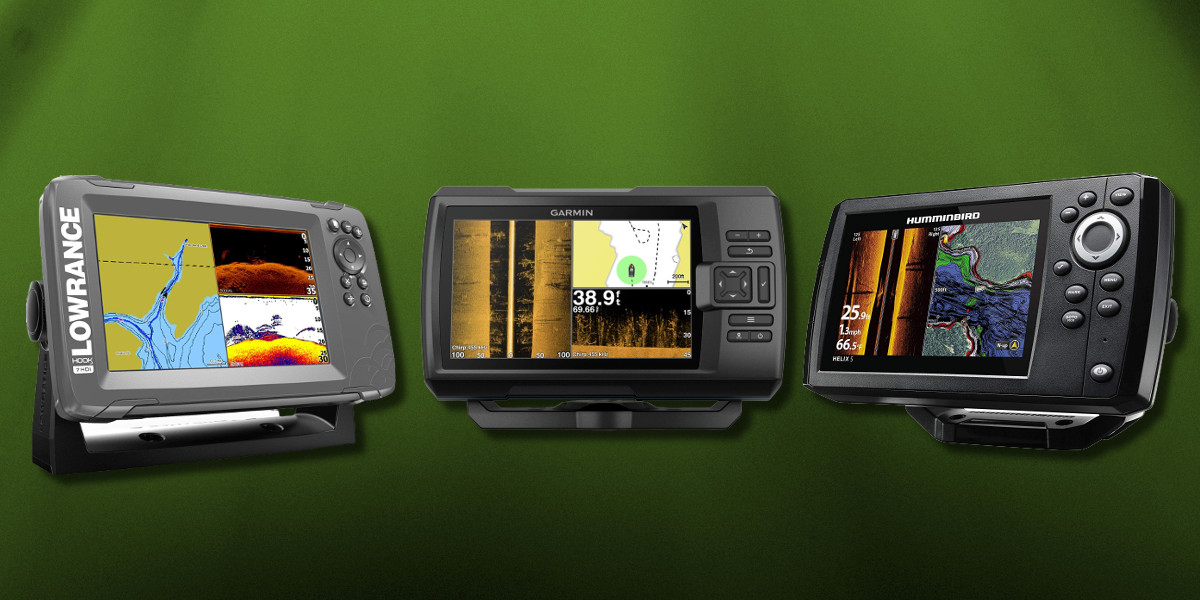
You do not need to spend $500 to find fish. The gap between a $90 budget fish finder and a $400 premium unit has narrowed significantly, and for casual anglers fishing lakes and ponds, a cheap fish finder will show you depth, bottom structure, and fish signals without the price tag that makes you hesitate to bring it in a kayak.
That said, cheap has limits. You will give up screen real estate, sonar quality, and mapping features at this price. The goal here is to help you figure out which compromises you can live with and which ones will make you regret the purchase.
All prices and availability below are verified from live retailers as of June 2026.
Quick Picks
| Pick | Product | Price range | Best for |
|---|---|---|---|
| Best overall | Garmin Striker 4 | $119 to $130 | Kayak and small boat anglers who want GPS |
| Best castable | Deeper START | $89.99 | Shore, dock, and float tube fishing |
| Best for structure detail | Humminbird PiranhaMAX 4 DI | around $140 to $200 | Anglers who care about what is under the boat |
| Best step-up pick | Deeper PRO+ 2 | $159.99 | Serious bank fishers and ice anglers |
| Budget floor | LUCKY handheld wired units | $40 to $85 | Ice fishing, dock fishing, absolute bare minimum |
| Best mid-range value | Lowrance HOOK Reveal 5 SplitShot | $250 to $300 | Anyone ready to spend more for real maps and better sonar |
What to Look for at This Budget
Screen size and readability
Most fish finders under $150 use 3.5 to 4.3-inch displays. That is genuinely small on a bright day. The Garmin Striker 4’s 3.5-inch screen is the most common complaint in owner reviews. Screen resolution matters more than raw size: the Lowrance HOOK Reveal 5’s 800x480 panel looks noticeably sharper than the 480x272 screen on the PiranhaMAX 4.
CHIRP sonar vs. traditional single-frequency
CHIRP (Compressed High-Intensity Radar Pulse) transmits a range of frequencies rather than a single pulse, producing cleaner fish arches and better target separation. Two fish holding close together show as separate returns on CHIRP; they smear into one blob on single-frequency. At this budget, the Garmin Striker 4 is the only mounted unit with real CHIRP sonar.
GPS: do you actually need it?
GPS lets you mark the spot where you found fish and return to it later. On a lake with open water and few landmarks, that matters. On a small pond, a river, or water where you navigate by sight, it matters less. The Garmin Striker 4 includes GPS with waypoint marking but no lake maps. The Humminbird PiranhaMAX 4 has no GPS at all.
Castable vs. mounted
Mounted units give you a dedicated display, continuous real-time sonar as you move, and generally better target detail. Castable units (the Deeper line) work from shore, dock, ice, or float tubes without any installation. If you fish from a bank and do not own a boat or kayak, castable is the only option. From any watercraft, a mounted unit wins at equivalent price.
Garmin Striker 4
Around $119 to $130 at Bass Pro Shops, Amazon, and Best Buy
The Striker 4 is the fish finder that reviewers and forum regulars consistently recommend when someone asks “what should I get as a beginner?” It earns that reputation by doing the important things correctly at a price that is not painful to spend. CHIRP sonar is unusual at this tier. GPS waypoint marking works without the complexity of full charts. The interface is simple enough with cold, wet hands. Battery draw is under 3 watts, so a small 7Ah battery lasts all day. Owners report 4-plus years of real-world use without failures.
Who it is for: Kayak anglers, jon boat fishers, and ice fishing enthusiasts who want a reliable first fish finder without paying for features they do not need.
Pros: CHIRP sonar at this price point is the standout feature. GPS waypoint marking is useful. Simple menu structure. Very low power draw. Ice fishing flasher mode built in. IPX7 waterproofing. Widely available.
Cons: The 3.5-inch screen (480x320) is the main complaint from owners. No lake maps, only waypoints. GPS and sonar cannot be viewed simultaneously on this screen size in a useful way. Not a unit for anyone who wants to see where they are on a chart.
Deeper START
$89.99 at deepersonar.com
The Deeper START is the entry point into castable fish finders. Cast it out, it connects to your phone via Wi-Fi, and the free Deeper app (iOS and Android) becomes your display. It works from shore, dock, float tube, or ice hole without any installation. Owners report it scans shallows and locates structure reliably for the price.
The limits: you depend on your phone, which means screen glare and battery drain. Wi-Fi range tops out around 80 meters. The single-beam 15-degree sonar gives less detail than dual-beam or CHIRP. Depth limit is 165 feet, which handles most freshwater situations but not deep reservoirs.
Who it is for: Shore anglers, dock fishers, float tubers, and ice anglers who do not own a boat and cannot mount a traditional transducer.
Pros: Under $100. No installation. Works anywhere you can cast. Compact enough to carry in a jacket pocket. App is usable and free. Phone GPS can generate shore-based mapping.
Cons: Requires phone to function. Single-beam sonar (15 degrees) gives less detail than mounted alternatives. 165-foot depth limit. Wi-Fi pairing takes a few seconds every session. Phone screen visibility in bright sunlight varies.
Humminbird PiranhaMAX 4 DI
Around $140 to $200 depending on retailer (standard PiranhaMAX 4 at $139.99; DI variant higher)
The DI (Down Imaging) model is the one worth considering in Humminbird’s entry-level PiranhaMAX line. The standard PiranhaMAX 4 uses dual-beam sonar. The DI adds a high-frequency narrow-beam that produces a photo-like image of structure below the boat, showing whether that dark mass on screen is a submerged log or a rocky ledge rather than just an arch. The 4.3-inch display is larger than the Striker 4’s screen, which owners appreciate. No GPS and no CHIRP: the trade is bigger screen and structure detail against the Striker 4’s CHIRP and waypoints.
Who it is for: Anglers who fish specific structure (timber, brush piles, rocky points) and want to see what is beneath them in more detail than traditional sonar allows, and who do not need GPS waypoints.
Pros: 4.3-inch display is more readable than the Striker 4’s 3.5-inch screen. Down Imaging adds useful structure detail at this price. Beginner-friendly menus. Fish and depth alarms included. IPX7 waterproofing.
Cons: No CHIRP (traditional dual-beam only). No GPS at all, and there is no way to add it later. Depth accuracy gets mixed owner feedback in specific conditions. The DI transducer adds cost over the standard model.
Deeper PRO+ 2
$159.99 at deepersonar.com (reduced from $179.99)
The PRO+ 2 is the serious castable option. Three frequencies (narrow 675 kHz at 7 degrees, medium 240 kHz at 20 degrees, wide 100 kHz at 47 degrees) cover everything from precise fish separation to broad scanning. The key upgrade over the Deeper START is onboard GPS: when the unit is in the water while you move by kayak, it draws a real map of what is below you on your phone. Battery life is 9 hours. Target separation goes down to 1 cm on the narrow beam, which is notably precise at this price.
Who it is for: Kayak anglers and bank fishers who want castable flexibility with better sonar quality and real GPS mapping. Also a strong ice fishing option.
Pros: Three frequencies for different scanning needs. Onboard GPS enables boat-mode mapping. 9-hour battery. Compact, full-submersion capable. Best target separation of any castable unit at this price.
Cons: Still requires a phone for display. At $160, it pushes above the “under $150” mark. Overkill for purely casual use. Wi-Fi range and phone battery are still factors.
LUCKY Handheld Wired Units
$40 to $85 on Amazon (varies by model)
The LUCKY and LUCKYLAKER handheld wired units are the budget floor of this category. A small transducer puck drops over the side of a dock, boat, or through an ice hole and shows depth, bottom contour, and fish signals on a small display. They work for what they are. The consistent complaint from owners who tested them against Garmin and Vexilar units: accuracy is limited. Multiple Amazon reviews report false fish returns. Single-beam at 200 kHz with a wide cone angle catches a lot of bottom clutter. Use as a backup or dock unit, not a primary fish finder.
Who it is for: Ice anglers wanting the absolute cheapest entry point, dock and bank fishers who just want rough depth and basic fish signals, or anyone who needs a backup unit.
Pros: Cheapest option in this entire category. No installation. Runs on AA batteries. Simple to use. Portable enough to carry anywhere. Works for ice fishing.
Cons: Accuracy is the main complaint across Amazon reviews. False fish returns are common. Single-beam with a wide cone angle misses the detail that CHIRP or dual-beam provides. No GPS, no maps, no imaging. Not the tool if you need reliable fish identification.
Lowrance HOOK Reveal 5 SplitShot (Step-Up Pick)
$250 to $300 at lowrance.com and Academy Sports
The Hook Reveal 5 sits above “cheap” at normal retail, but it is the right step-up if you want a real screen, real maps, and CHIRP plus DownScan in one unit. The 5-inch SolarMAX display at 800x480 is the best screen in this comparison by a meaningful margin. The SplitShot transducer covers traditional CHIRP, DownScan, and the FishReveal overlay that combines both for easier fish identification. Preloaded C-MAP US Inland mapping puts actual lake contour charts on the screen from day one.
Who it is for: Anglers who want to spend once and not upgrade again for several years, and who are willing to go slightly above the “cheap” budget for noticeably better hardware.
Pros: Best display in this comparison. CHIRP plus DownScan Imaging in one unit. Preloaded lake charts. FishReveal is genuinely useful for beginners learning to read sonar. Autotuning sonar reduces setup friction.
Cons: Not under $150. Side Imaging is not available at this price (you need to step up further in the Hook Reveal line). UI gets mixed feedback from owners who are used to Garmin’s menu structure.
What You Give Up at This Price
No lake charts. The Garmin Striker 4 marks waypoints but has no maps. Lake contour charts start at the Hook Reveal price tier and above.
Smaller screens. The standard at this budget is 3.5 to 4.3 inches, which is workable but not comfortable at arm’s length in bright sunlight.
No Side Imaging. Down Imaging is available on the PiranhaMAX 4 DI. Side Imaging (scanning both sides of the boat simultaneously) does not appear until you are well above this price range.
Accuracy trade-offs. The sub-$90 handheld units have documented reliability issues. Even the Deeper START’s single-beam sonar gives less precision than a mounted dual-beam or CHIRP unit.
If you plan to fish seriously for years, the Hook Reveal 5 at $250 to $300 costs less in aggregate than buying a $90 unit now and upgrading in two years.
Frequently Asked Questions
Do I need CHIRP on a cheap fish finder?
CHIRP distinguishes fish from bottom clutter more clearly than single-frequency sonar. The Garmin Striker 4 is the only budget mounted unit here with real CHIRP, which is a meaningful reason to prefer it over the PiranhaMAX 4 at similar prices.
Can I use a fish finder from shore without a boat?
Only castable units work reliably from shore. The Deeper START ($89.99) and PRO+ 2 ($159.99) are built for this. LUCKY handheld wired units also work from a dock or bank. Mounted transom-mount transducers require a boat or kayak in the water.
What is the difference between Down Imaging and regular sonar?
Traditional sonar shows fish arches and depth. Down Imaging sends a narrow high-frequency beam that produces a photo-like image of structure below the boat, showing the actual shape of a submerged log or rocky ledge. The Humminbird PiranhaMAX 4 DI includes it; the Garmin Striker 4 does not.
Will these work for ice fishing?
The Garmin Striker 4 has a built-in flasher mode for ice. The Deeper START and PRO+ 2 drop through an ice hole and work well. LUCKY handheld wired units also work from ice. The Humminbird PiranhaMAX 4 is not marketed for ice use.
Do I need GPS on a fish finder?
If you fish the same lake repeatedly and want to return to productive spots, yes. If you fish rivers, small ponds, or water you navigate by sight, GPS adds cost without much benefit. The Striker 4 has GPS; the PiranhaMAX 4 and Deeper START do not.